
Greensboro's African American Community Newspaper since 1967
As more and more people become concerned about the food they consume, we see a growing search for better quality and healthier options. At this time of year, we are happy to see more fresh fruits and vegetables in the supermarkets. They are a joy to look at and taste. We have long craved those fresh peaches and collard greens!
The question invariably comes up, though: Are they healthy? How were they grown? Were they raised in hothouses? Were herbicides used on them? What other chemicals were used in their cultivation, and will those chemicals harm me and my family?
This is the time of year that the EWG comes to the rescue. The Environmental Working Group is a nonprofit American activist organization that specializes in research and advocacy regarding agricultural subsidies, toxic chemicals, drinking water pollutants and corporate accountability.
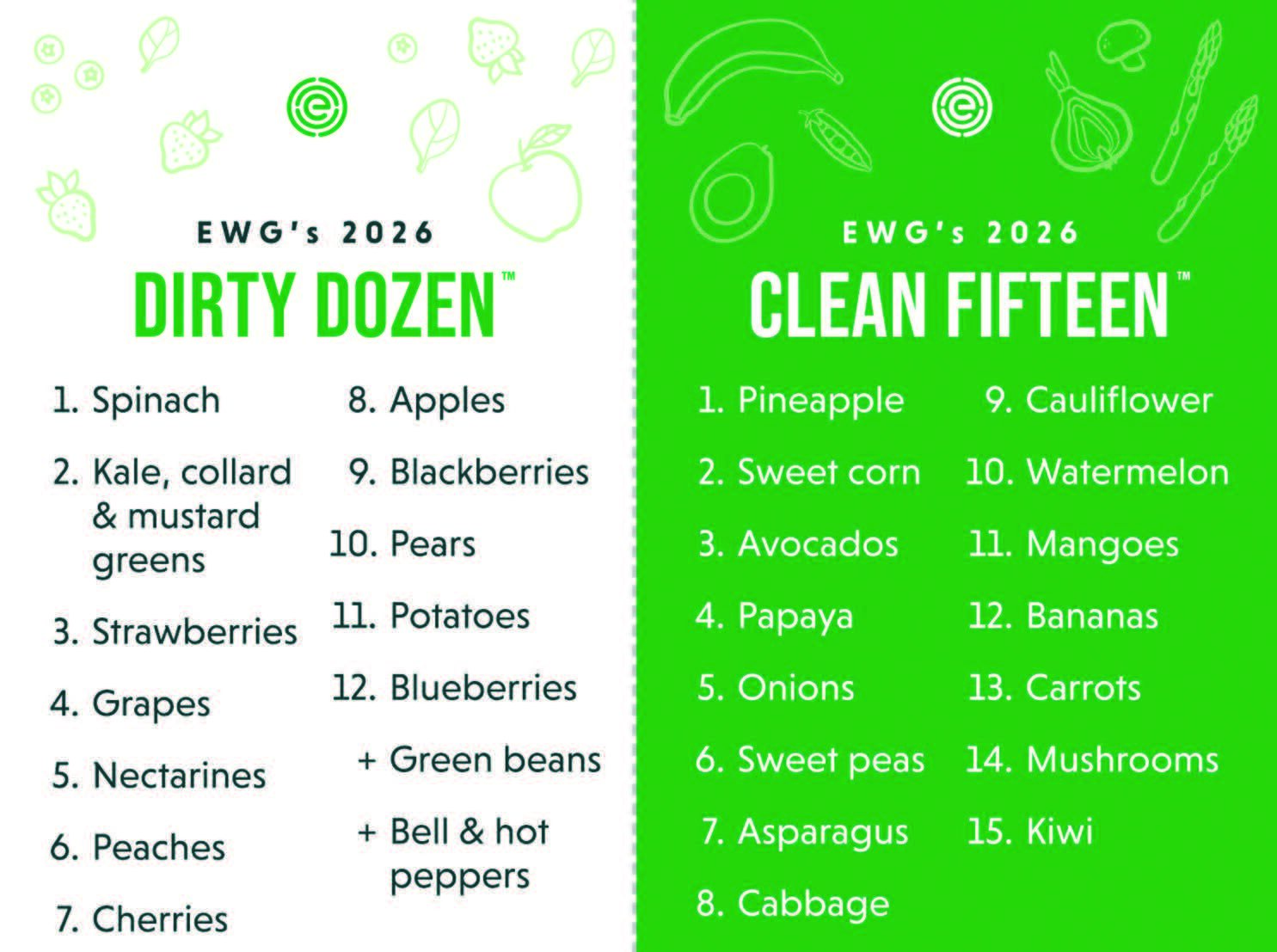
Each year, the EWG publishes a list of fruits and vegetables based on how they are grown. They assess which items have been exposed to various chemicals and ultimately use scientific data to publish a list of the produce they believe are the most potentially toxic to your health. This is known as the “Dirty Dozen.” With this group of fruits and vegetables, you have to weigh your options and your budget: Knowing they are exposed to possible toxic chemicals, should you spend the extra money to go organic?
Fortunately, the EWG also prints a list known as the “Clean Fifteen.” This is a selection of foods believed to have the least exposure to chemicals. Buying these conventional foods in a store, rather than spending extra money on organically grown alternatives, is perfectly fine for your health.
Certainly, fresh organic produce is more expensive. My top tip for saving money while still getting the best quality is to buy organic frozen food. With frozen options, you get the highest quality and no chemicals—all at a very reasonable price. There is a minor skill to cooking frozen vegetables, but it is easily learned. As far as the fruits are concerned, I simply place them in a bowl in the refrigerator the night before I plan to eat them, and away I go!
Both the fruits and vegetables taste great, and they can be easily repackaged and returned to the freezer. This cuts down on the waste of fresh organics going bad and is incredibly cost-effective.
Cut this out and carry it with you as you shop.
Dr. Veita Bland is a board-certified Greensboro physician and hypertension specialist. Dr. Bland’s radio show, “It’s a Matter of Your Health,” can be heard live on Wednesdays, 5:30 p.m. on N.C. A&T State University’s WNAA, 90.1 FM. Listeners may call in and ask questions. The show is replayed on Sirius 142 at 5 p.m. on Wed. Email Dr. Bland at ideas@blandclinicpa.com.


